Freya Lang · 10 September 2026
York Educators Integrate Coppergate Artifacts into Student-Centered History Curricula
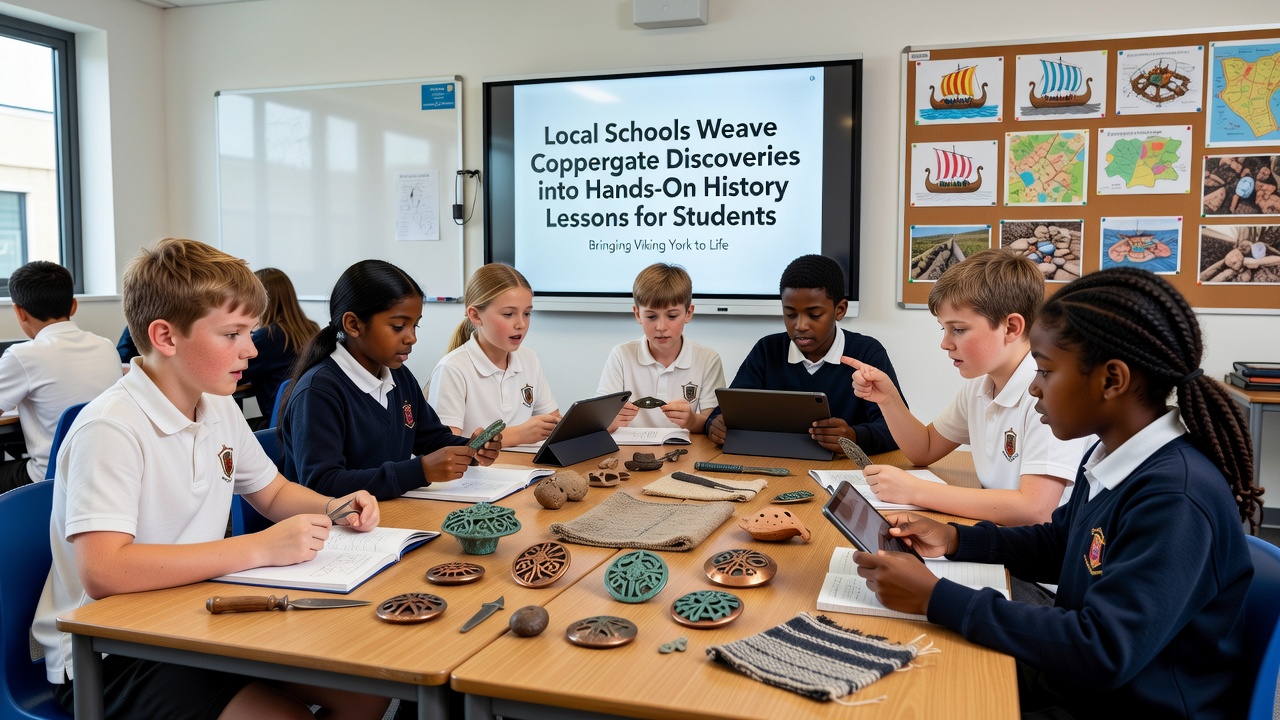
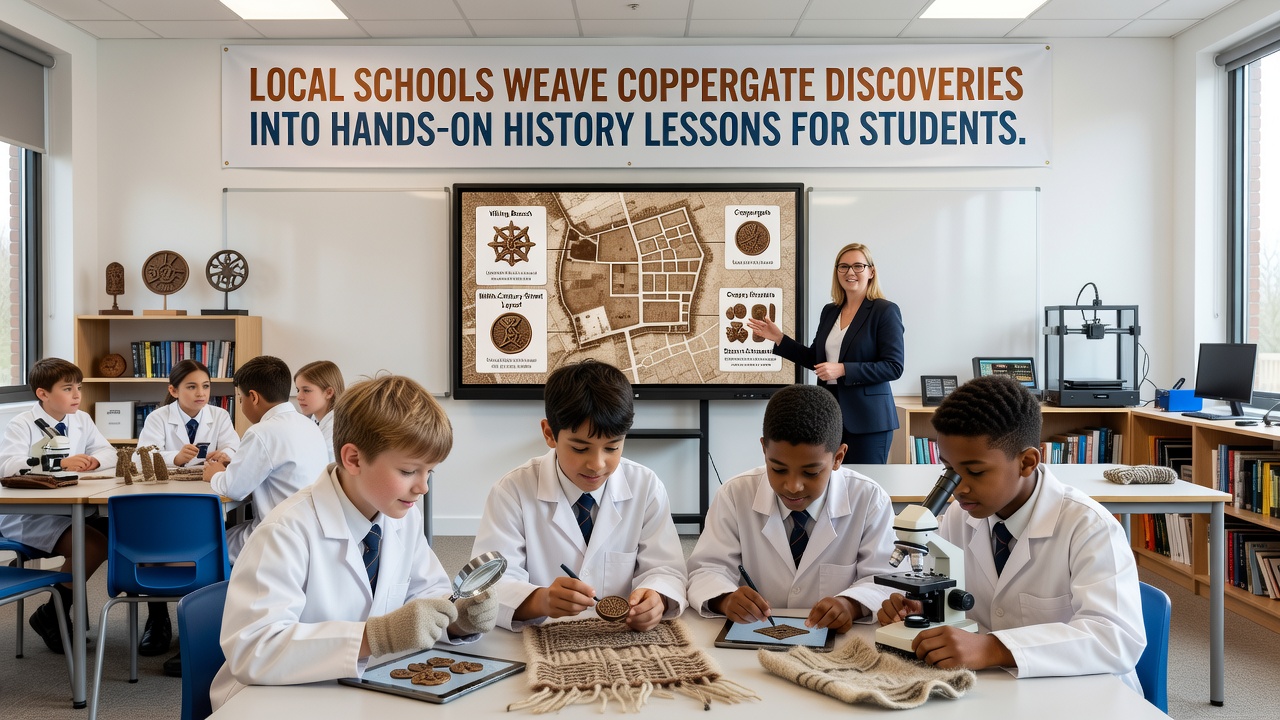
Local schools across York have begun weaving discoveries from the Coppergate excavations into interactive history lessons that let students handle replicas, map trade routes, and reconstruct daily Viking life using primary evidence gathered during the 1970s and 1980s digs. Teachers coordinate with the York Archaeological Trust to schedule visits where classes examine real finds before returning to school workshops that replicate leatherworking techniques and coin minting processes documented at the site. These programs align with the national curriculum while giving pupils direct contact with material culture that dates from the ninth to eleventh centuries.
Program Structure and Classroom Activities
Schools divide the Coppergate material into thematic modules that cover settlement patterns, craft production, and long-distance exchange networks. Students measure replica combs and gaming pieces to understand manufacturing tolerances, then compare their data with published measurements from the original assemblage held by the Yorkshire Museum. Sessions often incorporate digital overlays that project excavation plans onto classroom floors so groups can trace building outlines and locate where specific objects were recovered. By September 2026 the trust plans to expand access through a rotating loan scheme that supplies additional replica sets to schools outside the city centre.
Integration with Existing Curriculum Requirements
History departments map the Coppergate finds against Key Stage 2 and Key Stage 3 objectives that require pupils to evaluate sources and understand change over time. Teachers combine artefact study with written accounts from contemporary chronicles so students assess how material evidence either supports or challenges textual descriptions of York during the Viking period. Assessment tasks ask classes to produce short reports that cite both the excavated objects and the stratigraphic records, reinforcing skills in evidence handling rather than rote memorisation of dates.
One secondary school arranged a cross-curricular project with the geography department that uses soil samples taken during the original dig to discuss urban development and river management. Pupils plot artefact distributions on modern maps to see how the Coppergate area shifted from craft workshops to later medieval streets, a pattern confirmed in the published site reports. The exercise also introduces basic GIS tools supplied through an education partnership with a Canadian university geography programme.
Teacher Training and Resource Sharing
The York Archaeological Trust runs termly workshops that train staff in object handling protocols and interpretation techniques. Participants receive packs containing scaled drawings, photographic archives, and contextual essays drawn from the multi-volume excavation series. These materials allow teachers to design lessons without requiring additional site visits each year, while the trust updates content when new analyses become available from ongoing research on the faunal and botanical remains. A parallel initiative with an Australian heritage education network shares comparative case studies from similar urban excavations so instructors can highlight common methodological approaches across continents.
Community and Museum Partnerships
Local heritage organisations supply additional replica items and arrange supervised handling sessions at the Jorvik Viking Centre. Schools book timed slots that coincide with quieter periods so classes receive focused attention from interpreters who explain conservation methods applied to the original waterlogged wood and leather. Feedback collected after each visit records how many students correctly identify object functions after the session, providing quantitative data that informs future programme adjustments. The arrangement keeps costs low for participating schools because transport subsidies come from a regional cultural fund administered by the city council.
Primary classes often focus on sensory exploration by comparing the textures of replica textiles and furs with descriptions found in the site publications. Older pupils move on to statistical analysis of artefact counts per context, learning how archaeologists calculate discard rates and estimate workshop output. Both age groups finish their units with a public exhibition in the school hall where parents view the maps, models, and written interpretations produced during the project. Attendance figures at these events have remained steady across the last three academic years according to records maintained by the participating schools.
Evaluation and Future Developments
Researchers from a UK university education department have begun a longitudinal study that tracks student performance on source-analysis questions before and after the Coppergate modules. Early figures reveal measurable gains in the ability to cite multiple evidence types within a single answer. The study will continue through the 2026 expansion to determine whether the addition of new replica loans sustains or increases those gains. Meanwhile the trust continues to digitise field notebooks so teachers can incorporate primary excavation records directly into lessons without leaving the classroom.
Conclusion
York schools now treat the Coppergate discoveries as a recurring resource rather than a one-off topic, embedding the artefacts into standard history teaching through structured partnerships, teacher training, and shared materials. The approach supplies concrete examples that meet curriculum requirements while giving students repeated opportunities to practise evidence-based reasoning. As the September 2026 loan scheme rolls out, more classrooms will gain access to the same finds that first revealed the scale of Viking activity beneath modern streets, ensuring the discoveries continue to inform classroom practice for years ahead.