Freya Bennett · 4 November 2026
Volunteers Piece Together Overlooked Merchant Ledgers to Trace York's 10th-Century Supply Chains
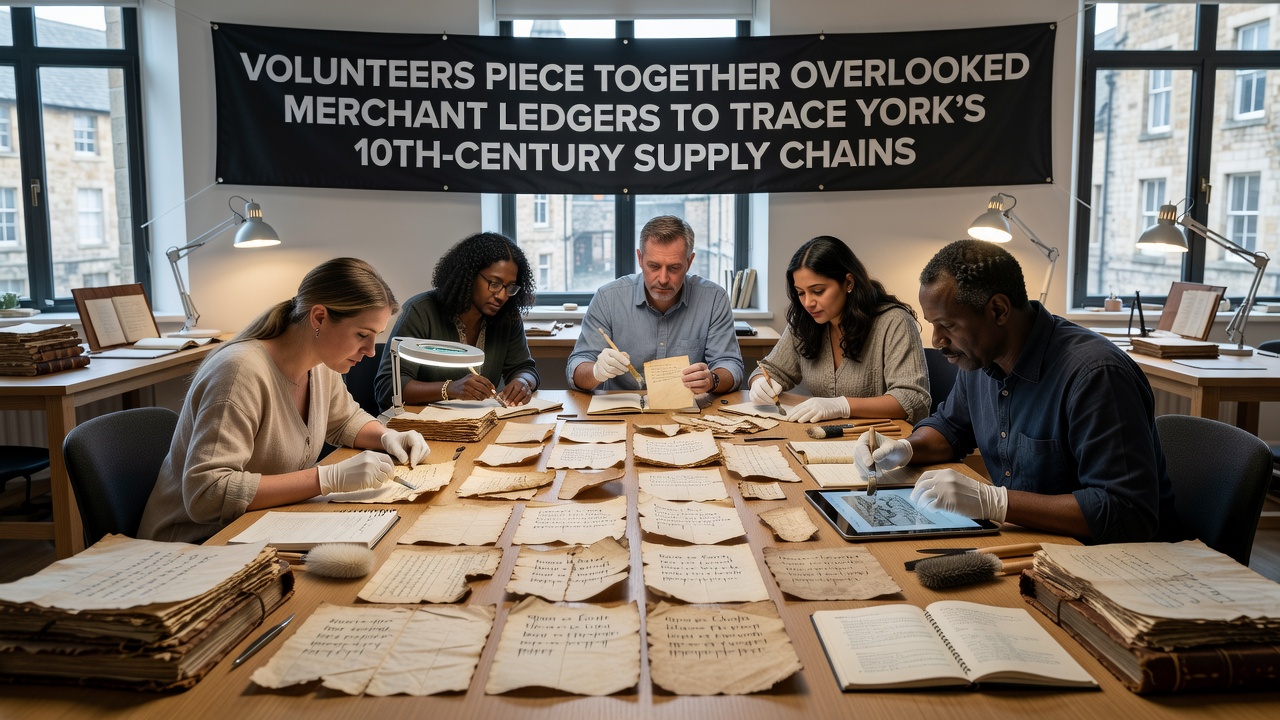
Researchers at the York City Archives have turned their attention to a collection of merchant ledgers dating back to the 10th century, and volunteers now handle the detailed transcription work that connects these records to broader trade networks across northern Europe. The ledgers, preserved on vellum and parchment fragments recovered during earlier excavations in the Coppergate area, list transactions involving timber, wool, and imported goods such as amber and salt, yet many entries remained unexamined until recent cataloguing efforts began.
Archivists note that these documents survived in scattered bundles, often misfiled among later medieval materials, which delayed systematic study until a coordinated volunteer programme started in 2024. Teams cross-reference entries against known ship manifests and excavation reports, revealing supply routes that linked York to ports in Scandinavia and the Baltic region through repeated mentions of specific commodity volumes and seasonal delivery dates.
Document Recovery and Initial Cataloguing
Staff at the archives identified the ledgers during a routine inventory review, and the decision to recruit volunteers followed because professional researchers faced competing demands from more recent collections. Training sessions cover palaeography techniques suited to Anglo-Scandinavian script styles, while digital scanners capture each page at high resolution for later analysis by university teams. One volunteer group completed transcription of 47 ledger pages within the first six months, producing data sets that list supplier names alongside quantities measured in pounds and ells.
These early transcripts already show patterns, such as consistent shipments of oak timber arriving in autumn months, which align with records from contemporary Danish trading posts. Observers note that combining ledger data with pollen samples from Coppergate soil layers strengthens the case for direct importation rather than local sourcing alone.
Mapping Supply Routes Through Cross-Referenced Data
Historians compare the York entries against surviving fragments held in other European repositories, including collections at the National Archives of Denmark and the University of Oslo library. Matches emerge for certain merchant names and cargo descriptions, indicating that York functioned as a redistribution hub where Baltic furs were exchanged for English cloth and metalwork. Data from the transcribed ledgers indicate average cargo sizes of 120 hides per vessel during peak seasons, figures that match estimates derived from excavated ship timbers at nearby sites.
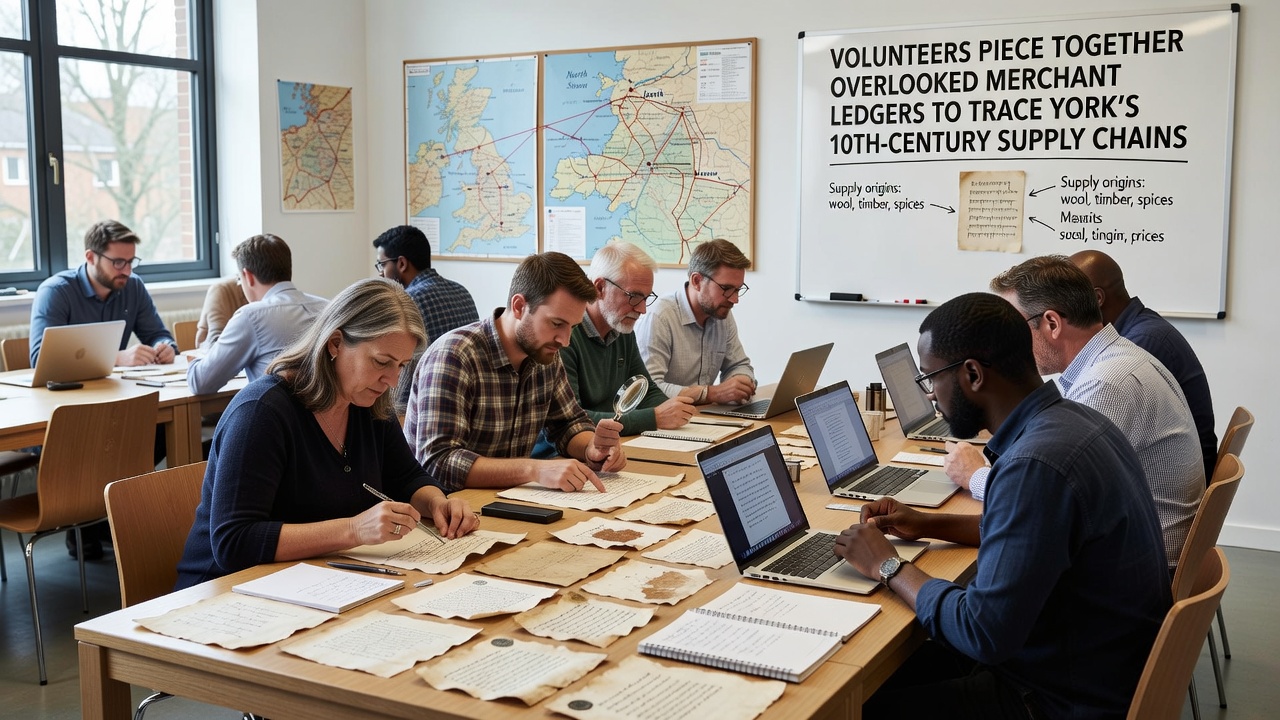
Digital mapping tools now plot these routes on interactive platforms, and November 2026 workshops will allow public participants to test updated versions against newly digitised material from the British Library. The workshops build on pilot sessions held earlier this year, where volunteers identified previously unnoticed references to overland transport between York and the Humber estuary.
Community Involvement and Technical Methods
Local history societies supply most volunteers, many of whom bring prior experience with genealogical research that translates well to name indexing. Software developed by the University of York’s Digital Heritage Unit assists with handwriting recognition, reducing manual entry time while volunteers verify flagged entries against original images. The process incorporates multispectral imaging on selected pages to recover faded ink, revealing additional columns that detail payment methods in silver and livestock.
Results feed into an open-access database maintained by the York Archaeological Trust, which already contains excavation metadata from the same district. Integration allows researchers to test hypotheses about seasonal trade fluctuations against both written and material evidence without relying on single-source interpretations.
Emerging Patterns in Trade Volume and Goods
Analysis completed so far points to steady increases in wool exports during the mid-10th century, with corresponding imports of whetstones and iron tools from Norway. Ledger totals suggest that one merchant family recorded annual turnover equivalent to roughly 800 silver pennies, a figure derived from repeated entries across multiple years. These numbers correspond with coin finds from the same period excavated in the region, providing an independent check on the written record.
Additional entries reference partnerships with traders based in Dublin and the Isle of Man, expanding the geographic scope beyond direct Scandinavian connections. Volunteers continue to process remaining bundles, and preliminary counts indicate at least 200 more pages await full transcription before the project reaches its 2027 target date.
Conclusion
The volunteer-driven examination of these ledgers supplies concrete data points that refine existing models of 10th-century York commerce, linking individual transactions to wider European networks through careful cross-referencing. Continued work through scheduled 2026 sessions will add further layers to the emerging picture without requiring new excavations.