Paul Klein · 23 September 2026
Community Voices Capture the Evolution of York's Ancient Trading Hub
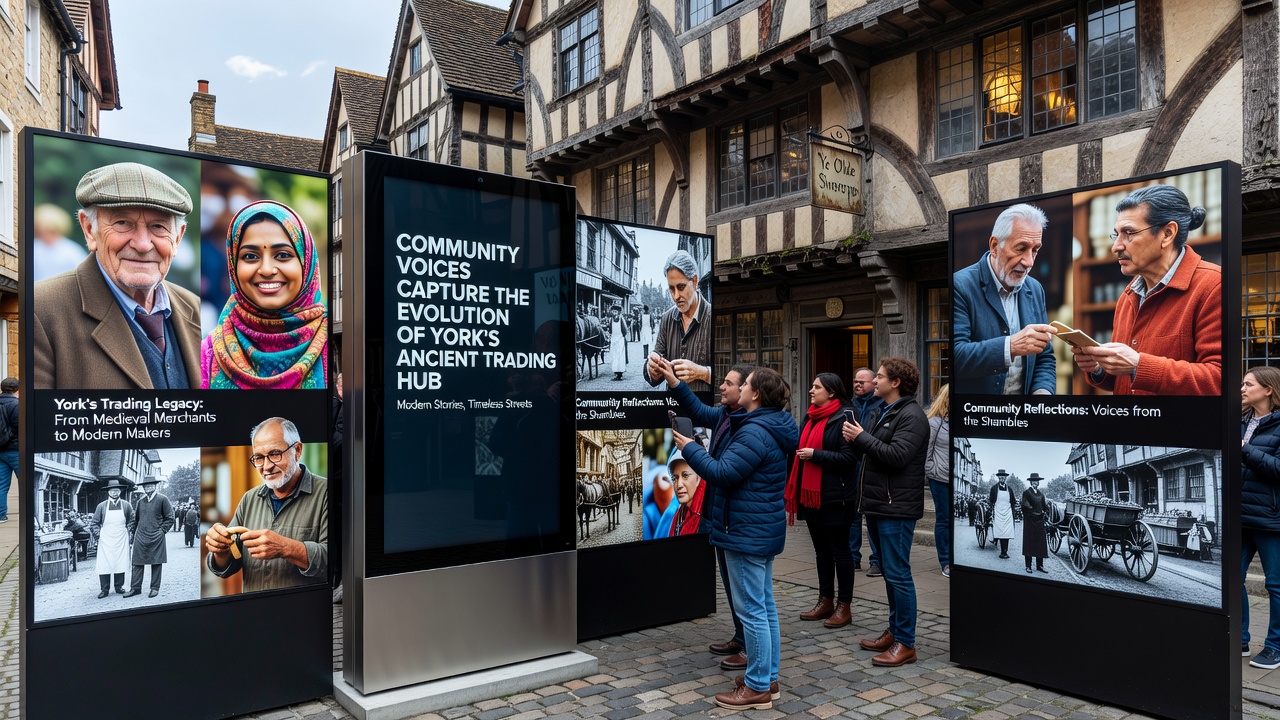
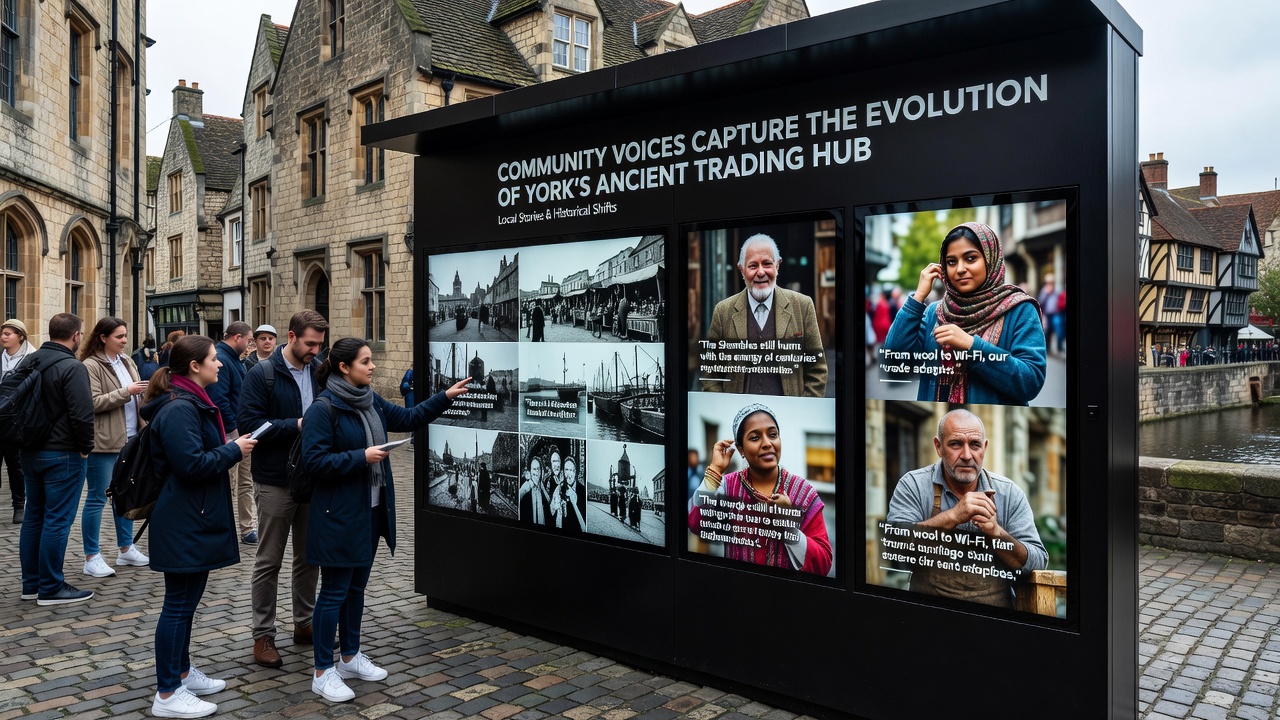
York's ancient trading hub has long stood as a central point for commerce and cultural exchange across centuries, and recent community initiatives have brought forward new layers of documentation that trace its development from medieval markets to later industrial phases. Local residents and historians have collaborated on projects that compile personal accounts, archival records, and site observations to build a broader narrative of how trade routes shaped the city's layout and economy.
Building a Record Through Local Contributions
Residents in the Coppergate area and surrounding neighborhoods have participated in structured oral history sessions since early 2024, where participants describe family businesses and market activities that operated through the 19th and 20th centuries. These sessions run alongside analysis of surviving ledgers and maps held at city archives, and the combined material reveals shifts in goods transported along the River Ouse and changes in merchant networks after the decline of certain guilds. Data from the York Archaeological Trust indicates that trade volumes in textiles and timber increased markedly between 1400 and 1600, while community-submitted photographs show how warehouse locations adapted to railway arrival in the 1830s.
September 2026 Events Highlight Ongoing Work
Planning is underway for a series of public workshops scheduled for September 2026 that will focus on mapping former trade routes through digital overlays on current street plans. Participants will use handheld devices to log locations of documented market stalls and storage buildings, then upload findings to a shared database maintained by the University of York. Similar efforts in other historic European centers have produced comparable datasets, and organizers expect the York project to add several hundred georeferenced entries by the end of that month. Attendance records from prior events show steady growth, with over 300 individuals contributing in 2025 alone.
Connecting Records Across Regions
Cross-referencing local findings with records from distant ports has expanded the scope of research. A study published by the University of Toronto examines how York merchants interacted with Baltic suppliers, and community researchers in York have matched names from those documents against parish registers to identify specific families involved in those exchanges. Meanwhile, reports from the Australian Heritage Commission on port development in Sydney note parallel patterns of warehouse adaptation that mirror changes observed along York's riverfront. These connections emerge through joint webinars rather than formal partnerships, allowing independent groups to share methodologies without centralized oversight.
Archival Integration and Public Access
Material collected from residents enters the public domain through the York Explore Library and Archive system, where digitized audio files sit alongside transcribed notes and scanned images. Access statistics released by the archive show monthly downloads exceeding 1,200 for the trading history collection, with peaks occurring after each community presentation. The process requires contributors to sign release forms that permit non-commercial reuse, and several secondary schools have incorporated excerpts into local history modules as a result. Researchers at the British Library have cited the collection in footnotes when discussing northern English mercantile activity, demonstrating how grassroots input feeds into established scholarship.
Challenges in Maintaining Momentum
Coordinators note that sustaining volunteer engagement requires regular updates on how submitted material is used, and they distribute quarterly summaries that list new citations or exhibition inclusions. Funding for equipment comes from small grants administered by regional heritage bodies, while venue space is provided by the city council on a rotating basis. One recurring issue involves verifying anecdotal details against written sources, and teams address this by cross-checking dates and names with multiple independent records before inclusion. The approach keeps the dataset accurate while preserving the range of perspectives offered by different age groups and family backgrounds.
Conclusion
Community-driven documentation continues to fill gaps in the written record of York's trading evolution, and the September 2026 workshops represent one step in an ongoing sequence of contributions. The resulting materials sit in accessible archives, support educational programs, and link to studies from institutions across multiple countries. As additional residents add their accounts, the collective record grows more detailed without replacing earlier historical frameworks.